What Is a URL Shortener? Definition, Redirects and Uses (2026)
A URL shortener stores a long web address, gives you a short alias, and redirects visitors there. Here is the definition, the uses, and the limits to know before you share one.
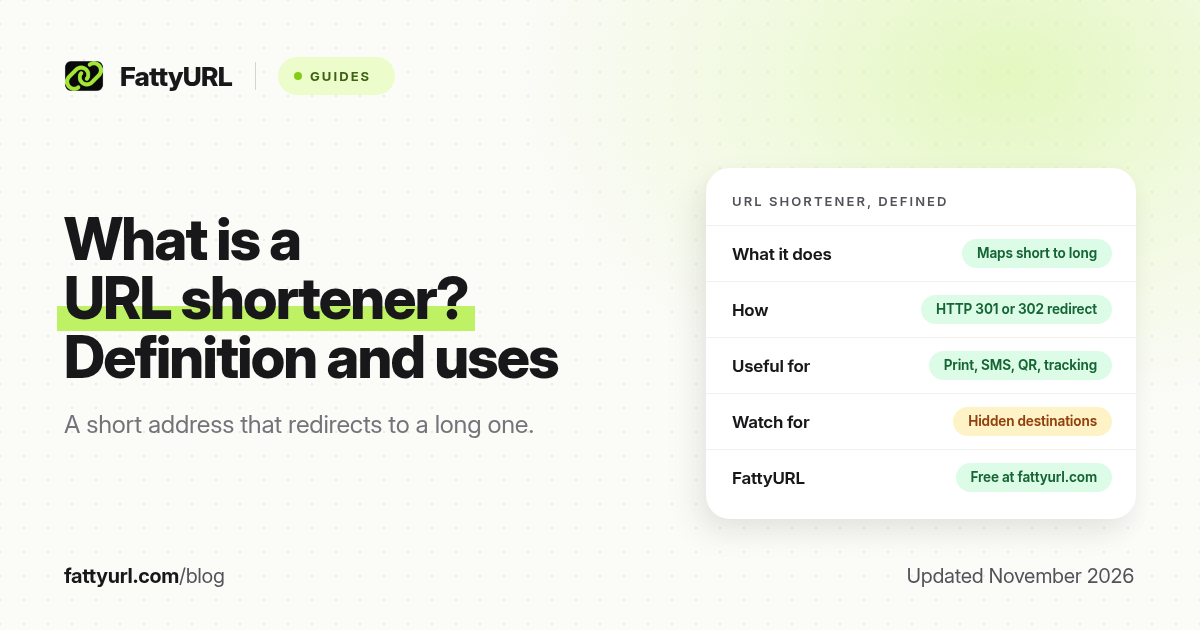
Short answer: A URL shortener is a service that maps a short web address to a longer one and sends visitors there with an HTTP redirect, usually a 301 or 302. People use it to fit links into texts, posts, print and QR codes, and to count clicks. The short address hides the destination, so preview a link you do not trust before you open it.
If you have ever pasted a long web address into a box and got something like fattyurl.com/abc123 back, you have used a URL shortener. This page is the plain definition: what the tool is, how the redirect works, what it is good for, and what it cannot do. FattyURL is a free URL shortener at fattyurl.com.
What is a URL shortener?
A URL shortener (also called a link shortener or short URL service) stores a long URL and assigns it a shorter alias on a short domain. When someone visits the alias, the service looks up the stored address and redirects the browser to it. The short address is easier to share, say aloud, print, or embed in a QR code than a page URL full of tracking parameters.
The shortener is the middle hop, not the destination. It does not host your article, video or form. It only remembers the mapping and, on many tools, records that a click happened.
How does a URL shortener work?
The mechanics are straightforward, and is.gd's own FAQ describes the same loop used across the industry:
- You submit a long URL.
- The service stores that URL and creates or accepts a short alias, sometimes called a slug or back-half.
- It gives you a short URL that includes its domain (or your branded domain) plus that alias.
- A visitor requests the short URL. The service looks up the alias and responds with an HTTP redirect, typically 301 (permanent) or 302 (temporary), and a Location header that holds the long URL.
- The visitor's browser then requests the long URL and loads that page.
A 301 can pass more search-engine credit to the destination than a 302; is.gd, for example, documents that it always uses 301. Other tools may use 302, or a mix. The status code is a technical choice. It is not a safety rating.
Some shorteners also let you edit the destination later, set a custom slug, attach a QR code, or show click counts by day, country or referrer. Those are features on top of the redirect, not part of the definition.
What is a URL shortener used for?
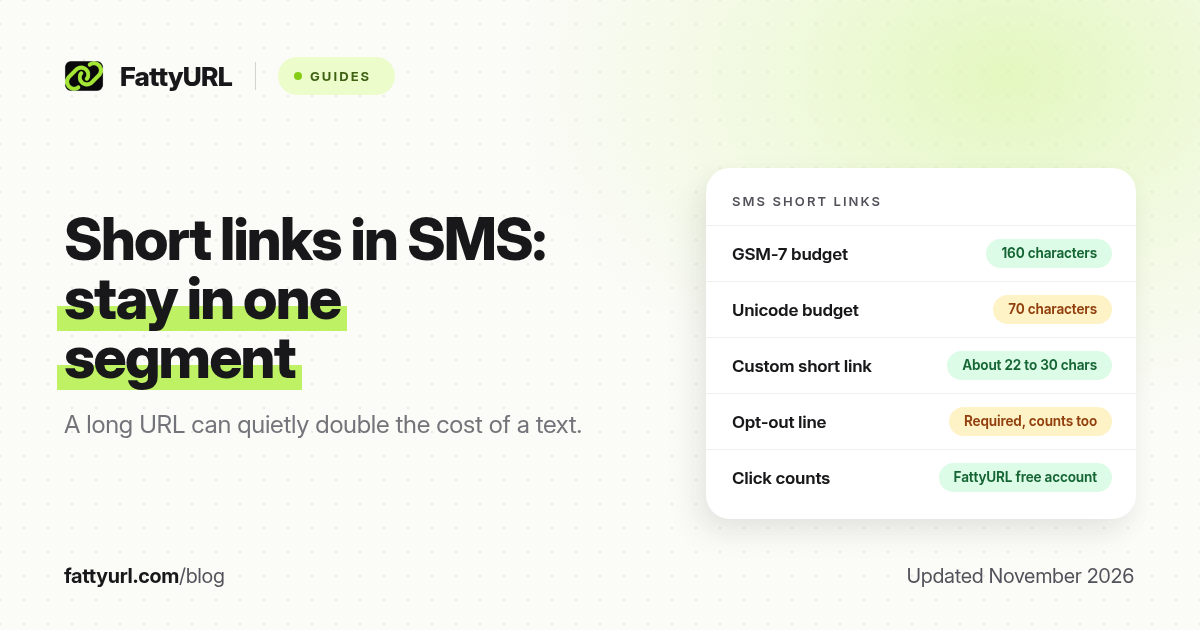
- Space. SMS, some social posts, slides and printed ads still work better with a short address.
- Readability. A custom slug such as /summer-sale is easier to remember than a checkout URL with twenty parameters. See custom short links.
- QR codes and print. A short, editable link behind a printed code means you can change the destination without reprinting. Start at FattyURL's QR generator or our guide to making a QR code.
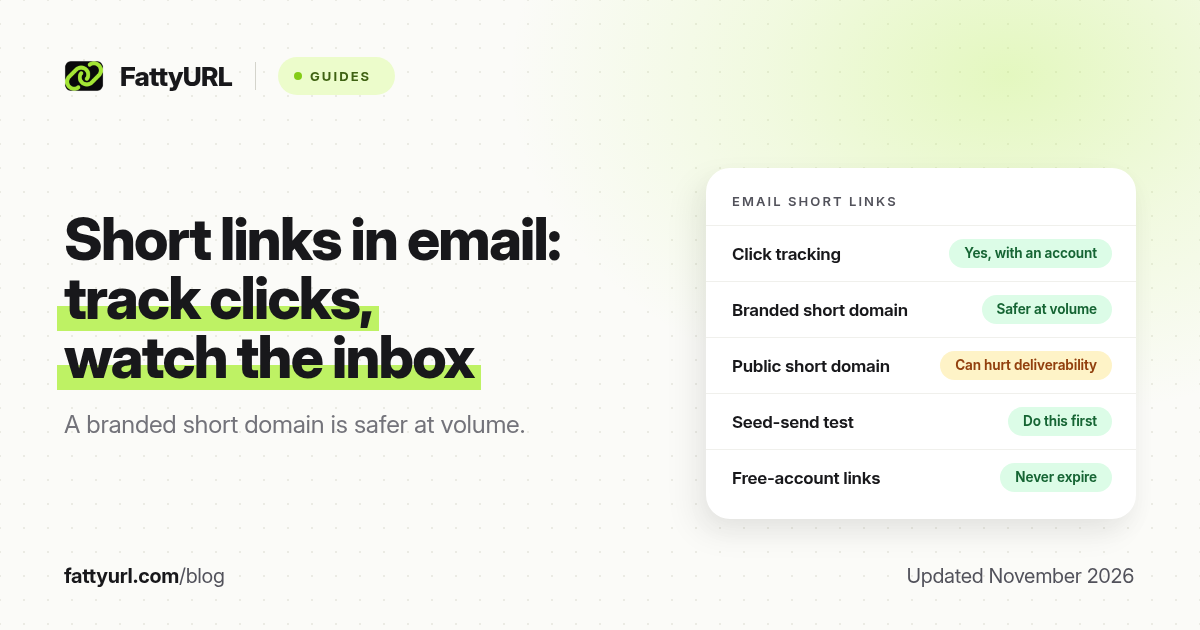
- Click data. Campaigns, newsletters and posters are easier to judge when you can see how many people opened the link. How to track link clicks walks through that.
- A stable public address. If the long URL will change, the short URL can stay the same while you update the destination, as long as your tool allows edits.
What are the limits and risks?
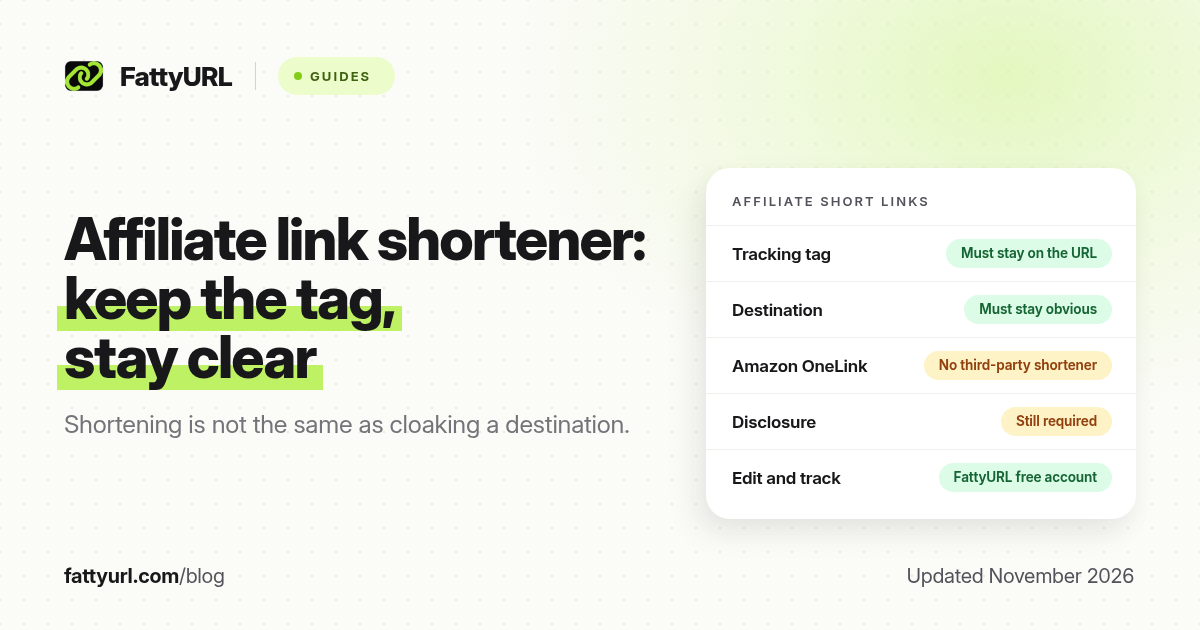
A short link hides the destination until you preview it. That is useful for a messy checkout URL and useful for a scammer. Popular short domains appear in phishing and malware reports for that reason, which does not make every shortener malicious. Preview first, especially on links from people you do not know. Official tricks and third-party expanders are covered in URL expander and in Are URL Shorteners Safe?.
Other limits to know:
- If the shortener shuts down, or your plan ends, some links stop resolving. Guest links and "free forever" claims are not the same thing. On FattyURL, guest links created from 7 October 2026 expire after 30 days; free-account links do not expire, and fattyurl.com links stay up if you cancel a paid plan. Custom-domain links stop 7 days after a paid plan ends.
- If you cannot edit the destination, a typo is permanent. is.gd, for example, says links cannot be deleted or pointed somewhere else once created.
- Click logs are a feature and a privacy fact. Do not put secrets in a URL.
- Some "earn money" shorteners insert ads or offer walls before the destination. They pay you, if they pay, for the delay. That is a different product from a regular shortener. See how monetised shorteners work.
How do I choose a URL shortener?
Start with the job, not the logo:
- Need one link, no account, and you accept that you may not be able to edit it later? A no-account tool can be enough.
- Need click counts, editable destinations and readable slugs at no monthly link cap? FattyURL's free account is built for that. Free links may show ads; paid plans from $9 a month do not.
- Need the link to sit on your own domain? That is a branded short link, often a paid feature, sometimes included on a rival's free plan.
- Need an API, bulk CSV or a team workspace? Check those caps on the vendor's pricing page. Our comparison of no-cost tools is in best free URL shorteners.
Create a free account at fattyurl.com if you want to shorten a link and see the clicks. There is no monthly link cap on a free account, and those links do not expire.
Key takeaways
- A URL shortener maps a short address to a long one and redirects the visitor.
- The usual mechanism is an HTTP 301 or 302 redirect, not a copy of the destination page.
- People use shorteners for space, readable slugs, QR codes, click counts and stable public URLs.
- The short address hides the destination, so preview links you do not trust.
- Features such as editing, branding, APIs and ads vary by tool and plan.
FAQ
Is a URL shortener the same as a link in bio?
No. A link-in-bio page is a small website with several buttons. A URL shortener creates one short address per destination, though some vendors sell both products.
Is a URL shortener the same as a vanity URL?
A vanity or custom slug is a readable ending you choose. A URL shortener is the service that hosts the redirect. You can use a shortener with or without a vanity slug, and with or without your own domain.
Do short links hurt SEO?
Search engines follow redirects. A shortener is not, by itself, a ranking strategy, and a chain of hops is messier than one clean redirect. If SEO credit matters, prefer a tool that documents a 301 and avoid stacking shorteners.
Do I need an account to shorten a URL?
Not always. Many tools, including FattyURL, let guests create a link. Guest features are thinner: on FattyURL, guest links from 7 October 2026 expire after 30 days and have no click data. See URL shorteners without an account.
What is the difference between a short URL and a QR code?
A QR code is a scannable picture that stores text, often a URL. A short URL is the address itself. You can put a short URL inside a QR code so the printed code stays small and editable.
Who invented URL shorteners?
Short aliases for long addresses appeared in the early 2000s as web links outgrew the spaces they had to fit, especially on SMS and early social posts. TinyURL is one of the longest-running public examples, dating to 2002. Bitly followed later and became a common public short domain. The idea, a lookup table plus a redirect, is older than any one brand.
Does FattyURL work as a URL shortener for free?
Yes. FattyURL is a free URL shortener at fattyurl.com. A free account includes click analytics, destination edits, custom slugs and CSV export, with no monthly link cap. Free links may show ads. Paid plans have no ads and add an API and custom domains.
Sources
- is.gd FAQ on how shortening works and on 301 redirects, checked 19 November 2026: is.gd/faq.php.
- FattyURL product facts from fattyurl.com/pricing, last updated 5 October 2026, and the guest-link policy from 7 October 2026.
Disclaimer: This article is for general information only and is not legal or security advice. It was researched and drafted with the help of AI, and its facts were checked against the sources linked above, mostly each provider's own pricing, help and policy pages. URL shorteners, QR code tools and social platforms change their plans, prices and rules often, so confirm the details on the provider's website before you choose a plan, move your links or print a QR code. FattyURL is our own product. Spotted something out of date, or a FattyURL link being misused? Tell us and we will act on it.